
NEW REGIONAL PLAN MAPS BOLD PATH TO CLEANER AIR IN CENTRAL OKLAHOMA
Plan Seeks to Protect Public Health & Infrastructure
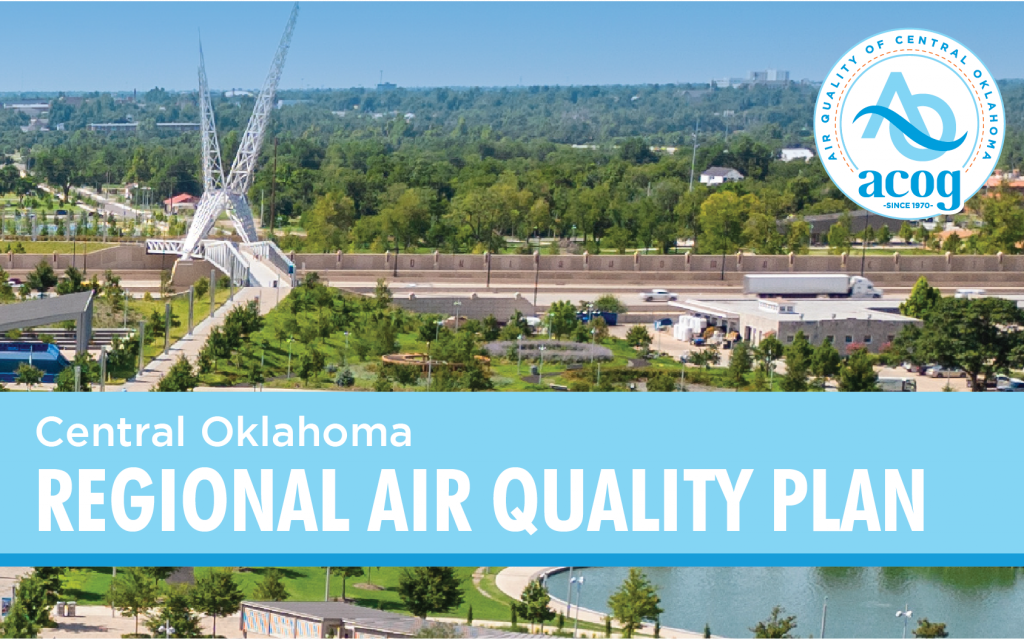
The Association of Central Oklahoma Governments (ACOG) has released its Central Oklahoma Regional Air Quality Plan, a strategic framework to protect and improve the region’s air quality while ensuring compliance with federal ozone standards.
The plan outlines five years of targeted actions to reduce emissions from transportation, industry, and other sources. It also serves as a supplement to the ACOG Cost of Nonattainment Study, helping Central Oklahoma avoid the costly consequences of falling out of compliance with the Environmental Protection Agency’s air quality standards.
“This plan represents a proactive, data-driven approach to improving air quality while supporting public health and economic resilience across the region,” said Mark W. Sweeney, AICP, ACOG Executive Director. “It demonstrates what’s possible when local governments, agencies, and communities work together toward shared goals.”
About the Plan
The Regional Air Quality Plan includes:
- Actionable goals and metrics for emissions reductions
- A five-year implementation timeline (2025–2030)
- Public engagement strategies and local government tools
- Monitoring and evaluation to track progress
Read the plan here.
As part of its ongoing plan implementation efforts, ACOG has awarded funding to several public entities through its Air Quality Public Fleet Grant Program, supporting the transition to electric vehicles (EVs).
University of Oklahoma Adds EV Charging Stations Near Campus Housing
The University of Oklahoma recently installed new electric vehicle charging stations near Dale Hall and other student housing facilities. Funded in part by the ACOG Public Fleet Grant Program, the project supports sustainable campus transportation and helps reduce ozone-forming emissions in a high-traffic corridor near downtown Norman.
Shawnee Public Schools Saving Thousands with Electric School Buses
Shawnee Public School District has already integrated four electric IC school buses—manufactured in Tulsa—into its fleet, with four more on the way. The district reports impressive operational savings:
- $10,000 in monthly fuel savings
- $4,600 saved per bus, per month compared to diesel models
- Elimination of $600 oil changes every 4–6 weeks
- Extended brake life—only requiring service every 3–4 years versus 12–14 months for diesel
These cost savings allow the district to redirect funds toward classrooms and student services—showcasing the practical, budget-conscious benefits of clean transportation in Oklahoma.
To read the full plan or learn more about ACOG air quality programs, visit: https://www.acogok.org/air-quality/