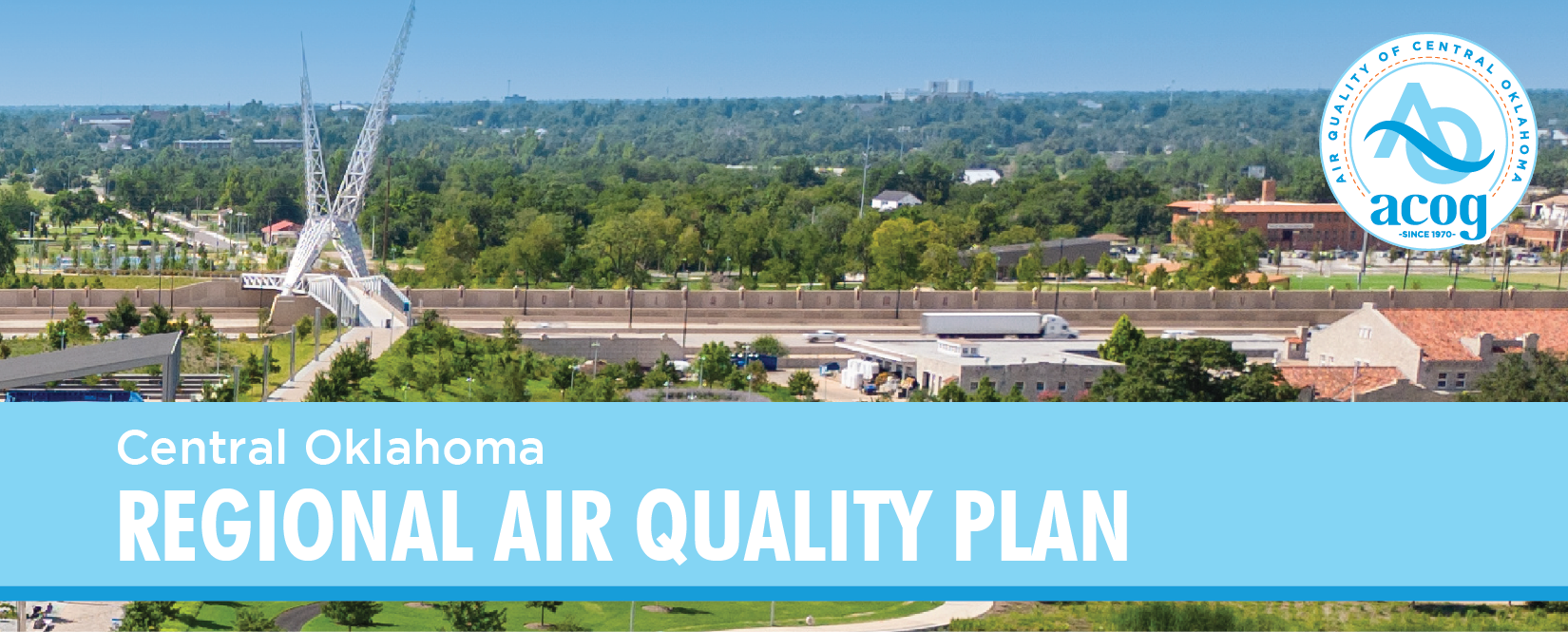
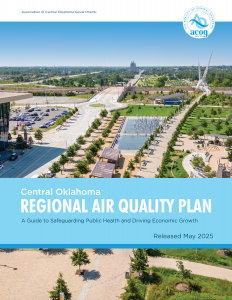
CENTRAL OKLAHOMA REGIONAL AIR QUALITY PLAN
Protecting Public Health, Supporting Economic Growth
The Central Oklahoma Regional Air Quality Plan (RAQP) is a forward-thinking, data-driven strategy to safeguard the health and economic vitality of Central Oklahoma. As ozone concentrations rise and the threat of federal nonattainment designation looms, this plan represents our region’s proactive response to avoid costly consequences and ensure cleaner air for all.
This plan builds on findings from the Cost of Nonattainment Study and is designed to reduce emissions, improve community engagement, and align local actions with federal air quality standards.
OUR VISION
A Central Oklahoma where clean air supports healthier communities, a resilient economy, and a sustainable environment—now and for future generations.
WHY THIS PLAN MATTERS
-
We are one summer away from nonattainment.
Exceeding ozone limits could trigger millions in lost transportation funding and economic setbacks across the region. -
Air quality is a regional challenge.
Pollution doesn’t follow city limits. Solutions must be collaborative, inclusive, and regionally coordinated. -
Ozone is rising.
Monitors across the Oklahoma City Metro Area are nearing the EPA threshold of 70 parts per billion (ppb).
KEY GOALS BY 2030
-
Reduce NOₓ and VOC emissions from on-road vehicles by 15%
-
Engage 50–75% of local governments in clean air ordinances or fleet transitions
-
Reach 250,000 residents annually through Clean Air outreach
-
Decrease industrial and commercial emissions by 10%
-
Convert 10% of municipal fleets to electric or hybrid
-
Launch a regional campaign identity, such as Clean Air Central Oklahoma
STRATEGIC FOCUS AREAS
- Transportation Emissions
Support clean commuting options, increase transit ridership, and expand EV infrastructure. - Industrial & Commercial Emissions
Promote energy efficiency upgrades, grant support, and a voluntary business partnership program. - Public Awareness & Community Engagement
Educate the public on ozone season, Ozone Alert Days, and clean air actions like reducing idling. - Local Government Tools & Policy Support
Provide technical assistance, model ordinances, and training to empower municipal action.
IMPLEMENTATION & ACCOUNTABILITY
ACOG will coordinate implementation over a five-year period in collaboration with local governments, public agencies, businesses, and community partners. Progress will be tracked through:
- Annual performance reports
- Partner updates and surveys
- Core metrics on emissions, outreach reach, and ordinance adoption
Contact Air Quality Staff
Association of Central Oklahoma Governments
(405) 234-2264
Office Address
4205 N. Lincoln Blvd.
Oklahoma City, OK 73105
8:30 AM – 5:00 PM | M-F
Contact Us
Speak Up Central OK
Civil Rights-Title VI
Accessibility Statement
Privacy Policy