
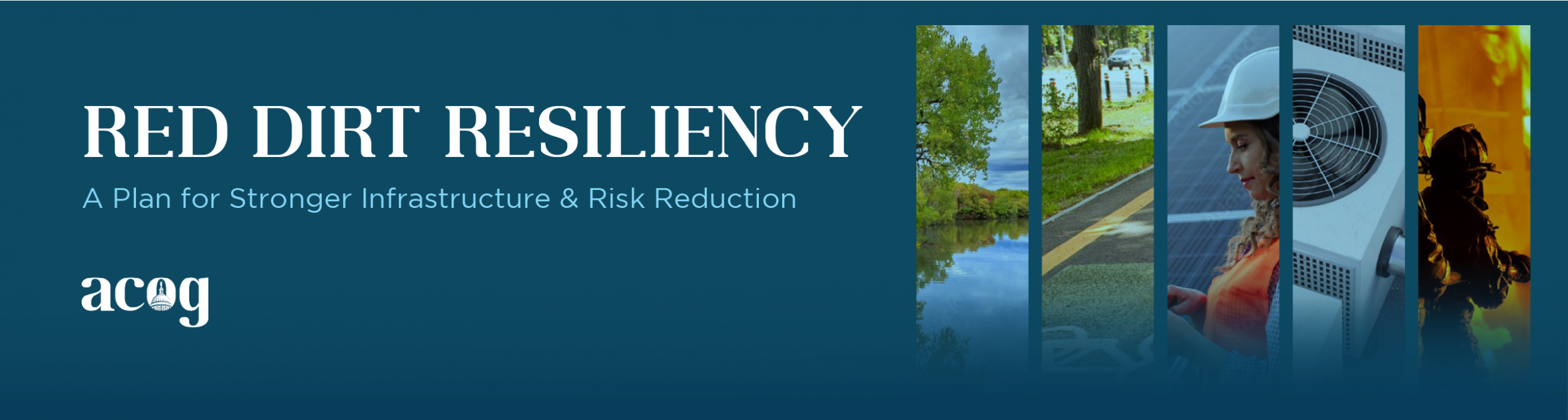
The Red Dirt Resiliency Plan is a regional roadmap for strengthening communities across eight counties in Central Oklahoma.
Led by ACOG and shaped by regional partners, the plan focuses on practical and achievable actions to improve infrastructure, prepare for extreme weather, improve air quality, reduce pollution and energy use, and build a safer, more resilient region.
Stay connected with the RDR Plan
Sign up to receive updates from ACOG as the Red Dirt Resiliency Plan moves forward, including new resources and opportunities to participate.
Have five minutes? Share your thoughts.
What do you think about the Red Dirt Resiliency Plan?
Why This Matters to Central Oklahoma
The Red Dirt Resiliency Plan provides a practical roadmap for addressing regional challenges and improving the services, infrastructure and quality of life Central Oklahoma residents depend on every day.
More Reliable Infrastructure
The plan helps communities identify weak points in roads, water systems and public facilities to help prioritize improvements before small problems become costly disruptions.

Ready for Oklahoma’s Toughest Weather
It’s important for communities and regional partners to work together. The plan promotes the preparation and coordination of resources before and after severe storms, floods, extreme heat, drought, wildfires and winter weather.

Making Public Dollars Go Further
The plan supports long-term planning, shared resources, and energy-efficient improvements that can help communities make better use of limited public funds.

Safer, Easier Ways to Travel
Communities benefit from better traffic flow, safer streets and practical transportation options. The plan supports solutions like roadway improvements, transit connections, sidewalks and more.
Healthier Places to Live
The plan supports cleaner air and water, additional shade, better stormwater management and inviting public spaces, which contribute to stronger communities.
ACOG Communities Influenced the Plan
In 2025, ACOG met with local governments, tribal nations, utilities, nonprofits and other regional partners to understand the challenges facing Central Oklahoma communities. 10 consistent themes emerged. That feedback directly shaped the priorities and recommended actions in the Red Dirt Resiliency Plan.
1. Our Infrastructure Needs to Be More Reliable
What we learned: Roads, water systems, utilities and public facilities are increasingly strained. Repairs are often reactive, repetitive and expensive.
How Red Dirt responds: The plan calls for infrastructure assessments, municipal asset-management plans, improved design tools and coordinated flood, watershed and utility planning. These resources can help communities identify risks and prioritize improvements before systems fail.
2. Communities Need Additional Staff and Training
What we learned: Many local governments are understaffed, rely heavily on institutional knowledge and lack access to specialized training or consultants.
How Red Dirt responds: The plan recommends regional training, shared technical resources, standardized templates and assistance for smaller communities. These tools can reduce duplicated work and help local staff make use of regional expertise.
3. Disaster Recovery Is Difficult and Expensive
What we learned: Smaller emergencies can strain local budgets and staff, while state or federal assistance may be delayed, limited or unavailable.
How Red Dirt responds: The plan emphasizes preparation before disasters, including mutual-aid coordination, resource sharing, continuity planning and stronger communication among local governments, utilities and emergency managers. ACOG can also help communities identify recovery resources, although disaster funding decisions remain with state and federal agencies.
4. Planning Capacity Varies Across the Region
What we learned: Not every community has updated plans, complete infrastructure inventories or the staff capacity to coordinate across jurisdictional boundaries.
How Red Dirt responds: ACOG can provide shared data, model policies, planning tools and technical assistance while coordinating issues that cross city and county lines. Local governments retain authority over adoption, funding and implementation.
5. Miscommunication Can Affect Trust and Safety
What we learned: Public warnings may be misunderstood or ignored, while communication gaps between organizations can slow the exchange of important information.
How Red Dirt responds: The plan supports coordinated contact systems, standardized risk-communication tools and outreach tailored to residents, businesses and local leaders. It also encourages public education about preparedness, response and recovery.
6. Funding Issues Can Delay Important Projects
What we learned: Communities face limited budgets, competitive grant programs, matching requirements and shortages of staff who can manage complex applications.
How Red Dirt responds: The plan recommends regional grant support, pooled resources, shared contracting and coordinated project development. These approaches can help communities compete for funding and make limited local resources go further, but funding for individual projects is not guaranteed.
7. Successful Energy Projects Can Be Expanded
What we learned: Communities including Norman and El Reno have demonstrated potential savings through projects involving solar energy, LED lighting and water reuse, but many communities lack the resources to pursue similar opportunities.
How Red Dirt responds: The plan recommends shared technical assistance, building-energy assessments, coordinated purchasing and efficiency improvements for public facilities, homes and businesses. Participation and implementation will depend on local decisions and available funding.
8. One Investment Can Provide Several Benefits
What we learned: Projects involving trees, green space, stormwater management and infrastructure improvements can solve multiple problems, but those benefits are not always considered during planning and budgeting.
How Red Dirt responds: The plan encourages communities to evaluate the full range of benefits a project can provide. Trees, for example, can create shade, improve air quality and absorb stormwater. Infrastructure improvements may increase reliability while also reducing operating or maintenance costs.
9. Communities Want to Plan Ahead, Not React
What we learned: Immediate needs often take priority over long-term preparation, even when repeated repairs and emergency responses become more expensive over time.
How Red Dirt responds: The plan promotes infrastructure inventories, risk assessments, continuity planning and long-term project prioritization. These steps can help communities identify vulnerabilities and invest before the next disruption occurs.
10. Communities Want Adaptable Solutions
What we learned: Local governments want consistent planning tools, training, design guidance and cooperative approaches—particularly in smaller and rural communities.
How Red Dirt responds: ACOG can develop regional templates, model policies, shared data and technical resources that communities can adapt to local needs. This reduces duplicated work while preserving local decision-making.
How the Plan Turns Priorities Into Action
The Red Dirt Resiliency Plan translates these community needs into 17 priority actions across five areas of regional action. Together, these areas provide a framework for ACOG, local governments and regional partners to coordinate resources and pursue practical solutions.
Transportation & Mobility
Coordinate traffic-management strategies, transportation and land-use planning, multimodal investments and public-fleet alternatives.
Infrastructure & Energy
Develop building-efficiency programs, critical-facility assessments, municipal asset-management plans and stronger coordination between development and utility infrastructure.
Industry & Economic Development
Provide technical assistance to businesses, incorporate disaster continuity into regional economic planning and support workforce preparation.
Environment & Natural Systems
Develop regional tools and partnerships for tree canopy, parking design, green infrastructure, water quality and flood-risk reduction.
Emergency Management
Improve mutual-aid coordination, cross-sector training, risk communication and continuity planning.
How ACOG Helps
ACOG serves as the regional coordinator for the Red Dirt Resiliency Plan. Its role is primarily to bring communities and partners together, develop shared resources, provide data and technical assistance, identify potential funding opportunities and track regional progress.
Cities, counties, tribal governments, utilities and other partners retain authority over local projects, policies, budgets and implementation.
ACOG Can:
- Gather regional partners
- Develop shared tools, templates and data
- Provide technical and planning assistance
- Help communities identify funding opportunities
- Coordinate projects that cross jurisdictional boundaries
- Track progress and share lessons learned
The plan itself does not require a community to adopt a particular project or policy.
From Planning to Execution
The Red Dirt Resiliency Plan establishes a long-term framework for regional action. Initial work will focus on coordination, resource sharing, technical tools and local capacity. Individual projects will move forward as communities choose to participate and funding becomes available.
ACOG and its partners will monitor progress, identify obstacles and adjust strategies as new information and resources become available.
Future Updates May Include:
- Tools and resources released
- Participating communities and partners
- Funding opportunities and awarded projects
- Pilot programs
- Community success stories
- Measured results
- Annual progress reports
RESOURCES
Read the Plan
Red Dirt Resiliency
A Plan for Stronger Infrastructure & Risk Reduction
Read the complete plan, including regional data, recommended actions, implementation responsibilities, estimated benefits and supporting research.
Executive Summary
Review a brief overview of the region’s challenges, recommended actions, expected benefits and implementation approach.
One-Page Overview
Get the plan’s purpose, priorities and key actions in an easy-to-share format.
How This Work Began
The Red Dirt Resiliency Plan was developed through the U.S. Environmental Protection Agency’s Climate Pollution Reduction Grants program. The program provided planning funding to states, metropolitan areas and tribal nations to identify strategies for reducing pollution, improving air quality and preparing communities for future risks.
ACOG first developed a Priority Climate Action Plan for the Oklahoma City metropolitan area. That initial work was expanded through data analysis, public input and regional stakeholder meetings to produce the final Red Dirt Resiliency Plan in December 2025.
Frequently Asked Questions
What is the Red Dirt Resiliency Plan?
The Red Dirt Resiliency Plan is a regional plan developed to help Central Oklahoma communities strengthen infrastructure, prepare for extreme weather, improve air quality, reduce pollution and energy use, and coordinate long-term investments.
What area does the plan cover?
The plan covers the eight-county Oklahoma City metropolitan area: Canadian, Cleveland, Grady, Lincoln, Logan, McClain, Oklahoma and Pottawatomie counties.
What does “resiliency” mean?
Resiliency is the ability of a community to prepare for disruptions, reduce damage, maintain essential services and recover more effectively. It can include stronger infrastructure, emergency planning, reliable utilities, responsible resource use and regional cooperation.
Will ACOG implement every recommendation?
No. ACOG primarily coordinates regional planning, develops shared resources and provides technical assistance. Cities, counties, tribal governments, utilities and other partners decide which local projects and policies to pursue.
Is community participation required?
The plan does not by itself require local governments to adopt its recommendations. It provides regional strategies, tools and opportunities that communities can use according to their needs, priorities and available resources.
How will the plan be funded?
The Red Dirt Resiliency Plan was produced with federal planning funds. Implementation will depend on existing local resources, state and federal programs, grants, partnerships and other financing opportunities. Inclusion in the plan does not guarantee that an individual project will receive funding.
How can I follow the plan’s progress?
ACOG will provide updates as tools are developed, partnerships are formed, funding is secured and projects move forward.
Questions about the Red Dirt Resiliency Plan?
Contact Air Quality Staff
Association of Central Oklahoma Governments
(405) 234-2264
Office Address
4205 N. Lincoln Blvd.
Oklahoma City, OK 73105
8:30 AM – 5:00 PM | M-F
Contact Us
Speak Up Central OK
Civil Rights-Title VI
Accessibility Statement
Privacy Policy